


Birmingham: Trauma and Sorrow
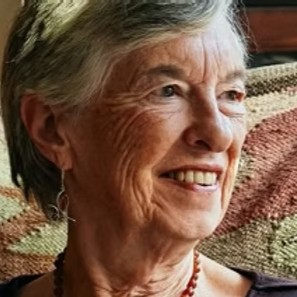
I am a little older than most of this group, Kids in Birmingham 1963. I moved to Birmingham from a suburb of New York City in 1946 at the age of five. My parents had bought a house on Southside and did not have a car. I was soon taking a city bus downtown by myself for various reasons. On the buses, I noticed the disparity between what white people had to do to ride the bus and what Black people had to do. I learned I was white from riding the buses. They had movable signs inserted in bars across the backs of the seats that said White on one side and Colored on the other, and I knew I was to sit in the white section. I had known about the maternal side of my family being enslavers for as long as I can remember, it always troubled me. After graduating from Ramsay High School and attending St. John’s College in Annapolis, Maryland, for one year, my then-husband and I were married in 1960 in the Unitarian Church. He and his family had been attending the church since the late 1950s. We along with other members of the church soon became involved with the African Americans’ brave struggle for their civil rights.
The year 1963 is seared into everyone’s memory. The boycotts and marches had begun in earnest. It seemed like federal troops and local police were everywhere. Now, the white-owned newspapers, which had not published racial issues fully and accurately, were full of the events which were no longer possible to keep secret. King was jailed. The world knew about the Children’s March and the dogs and hoses.
The bombings which had begun in the 1940s, became more frequent and deadly until finally, the bombing that will never be forgotten—Sunday morning, September 15, 1963, nineteen sticks of KKK-planted dynamite exploded at the Sixteenth Street Baptist Church and killed Addie Mae Collins, Denise McNair, Cynthia Wesley, and Carole Robertson. Elsewhere in the city later that same day, two young Black boys were shot and killed in separate incidents: Johnny Robinson, by a white police officer, and Virgil Ware by a white Eagle Scout. Johnny was sixteen and Virgil was thirteen.
My mother-in-law and I went to the funeral of three of the girls held at the Sixth Avenue Baptist Church. We were among only a handful of white people there. Carole Robertson’s funeral was elsewhere. The FBI was taking down license plate numbers. Despair and fear swam and thrashed in all of us.
At the end of the year, my then-husband and I bought our first house. That turned out to be a good thing for our civil rights activities. There was a large unfinished upstairs where soon a seemingly endless stream of out-of-town activists slept on pads in sleeping bags. It was good fortune that our house was perched on the side of Red Mountain with about 40 steps to the front door, and no street parking was allowed. So, the only access was up and down 30 steps to the back alley. No one could see what was going on which helped keep us all safe. The struggle kept on and by 1966, then exhausted and disheartened, we moved to North Carolina with our three children. Did we recognize the privilege we had in being able to leave? I am not sure. But, we never stopped being activists.
In 2023, Marcia Herman-Giddens submitted this story for publication by Kids in Birmingham 1963. In her 2023 memoir, Unloose My Heart: A Personal Reckoning with the Twisted Roots of My Southern Family Tree, Marcia describes growing up in Birmingham and exploring her ancestry, which includes white enslavers. Learn more at https://www.marciahermangiddens.com/.