


A Second Chance to Act
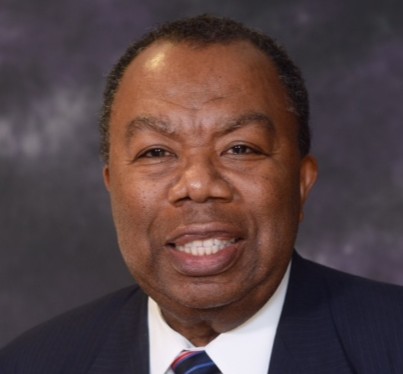
Growing up in Birmingham in the fifties and sixties was idyllic, which is probably very hard to imagine, given the U.S. Supreme Court’s Brown school desegregation decision in 1954, the Montgomery bus boycott in 1956 and all of the tumult of the ’60s. But, I was in high school before our church member, James Armstrong, a barber with an independent income that insulated him from white factors, filed his lawsuit to permit his young sons to integrate the Birmingham public schools, in 1963. Their sister was in my homeroom class at the time the courts ordered their admission. However, there were many other events unfolding in our lives and the race issue was not always uppermost in our thoughts. Many times it was the furthest thing from our minds. Life in the black community was full, varied and dynamic.
Although Birmingham was a large city for the South and I’ve always considered myself as having grown up in an urban setting, for we were only a mile from the downtown business district, the atmosphere of our neighborhood was actually quite rural. There were crayfish to be dug up in the yard, garter snakes hiding under rocks, and frogs everywhere. There were butterflies and other insects of every description.
* * *
I expect that Martin Luther King, Jr. was leading the bus boycott in Montgomery, less than 100 miles from where I was playing in my grandmother’s garden. I don’t recall ever being aware at the time. Life for me was one happy child exploit after the other. Within the midst of our own community, we were generally protected and carefree. Growing up black in the South was not a lot different than growing up white, I think. But, occasionally, the real world penetrated. I remember the neighborhood group en route to the elementary school athletic field, less than half a block from my home, and being stopped by the police who demanded that we empty our pockets. I was probably 12 years old at the time, had never really seen a policeman up close and was being told by two to show them what was in my pockets. At the time, I had short pants that had one pocket and nothing was in it. I remember my friends rummaging through their pockets and coming up with small change, a few marbles, some pieces of hard candy and a baseball card or two. The officers weren’t especially unfriendly and we went on to play our sandlot baseball game.
I entered A.H. Parker High School in Birmingham in the early Sixties. Counting from the date of the ruling in the Brown school desegregation decision, 1954, I had completed 8 years of schooling and was now venturing into the 9th grade, which was the beginning of the 4-year secondary school experience, [in a prestigious school that was still entirely black].
* * *
The 1963 Children’s March, which I sat out
The spring of my freshman year in high school was 1963. It was a turning point in many ways. Many people forget that the black race is not monolithic, that is, without regard to the issue, there is always more than one point of view. Of course, if you had asked any black resident in Birmingham in 1963, “Do you want to end segregation or not?” depending upon the particular circumstances, it is likely that the universal answer would have been affirmative. However, “how” and “when” exactly to go about accomplishing that goal would have been highly debatable. Within my own little world, up to the age of 14, I really had not had much experience with segregation. I remember that our family doctor was white and there were separate waiting rooms for black and white patients. However, the nurse was black and treated us very special. Also, the doctor’s wife, who also worked as a nurse in his practice, treated us very special indeed.
There were no signs in the doctor’s office to distinguish the waiting rooms. The adults knew which one to use and the children followed the adults, although I can remember wandering into the white waiting room on more than one occasion and marveling at the differences. In many other places in 1963, there were plenty of race restrictive signs and I simply obeyed them with the firm knowledge that this would change.
I don’t remember the first time I heard the name “Rev. Fred L. Shuttlesworth” but it was in connection with the local civil rights struggle in Birmingham. It appeared that Rev. Shuttlesworth and others would lead a local effort for change and it made a lot of people uncomfortable, both black and white.
One of those others was Rev. John H. Cross, Jr., who had come from Arkansas by way of Virginia to pastor 16th Street Baptist Church in Birmingham. It is said that Rev. Cross was confronted by rabid racism immediately upon his arrival and he vowed from the first moment to defeat it at every turn. The Church, which was located downtown at the forefront of the famous pictured epic demonstrator-police clashes, was pivotal in the success of the Birmingham desegregation campaign.
In a sense, Rev. Shuttlesworth and Rev. Cross were very much alike. Both were Baptist ministers, Southerners, youthful (early forties) and unafraid. However, while Rev. Shuttlesworth presented a somewhat homespun man of the soil persona, Rev. Cross was more the religious scholar quite in keeping with the 16th Street Baptist Church congregation’s image of itself for the most part. The two of them in combination were a formidable team. Together with others they formed the Birmingham Movement and, upon making no progress in negotiations with the powers that be in Birmingham to alleviate any of the discriminatory practices complained of by black people for years, invited Dr. Martin Luther King, Jr. to assist in the effort.
Everyone everywhere was talking about the growing Civil Rights Movement, Dr. Martin Luther King, Jr., and when were we going to be “free” in Birmingham. It was the number one topic at school, church, the playground, barber shop and just about anywhere that people gathered. We didn’t know what was going to happen exactly but most of us believed that change was coming. We just didn’t know when or what form it would take.
When Dr. Martin Luther King, Jr. came to Birmingham in 1963, even at the tender age of 15, I knew exactly why he was there and what the fight was all about. There was very little discussion at home about what we would do about school. All of us, I, my brothers and sister, had perfect attendance records from the day we entered first grade, and we had the annual certificates to prove it. I had never been absent or tardy, and it was made clear by my parents that nothing was more important than continuing that record. In their minds, at least, my life mission was to complete my education and do something constructive. Skipping school to demonstrate, no matter how noble and important the cause, was simply not an assignment for the Chambliss children. I did not answer his call to be absent from school and demonstrate instead.
To their credit, some of my friends’ parents were much more dedicated to the Movement and, in spite of sharing my family’s long term professional aspirations, other college-bound high school students left school to demonstrate. Many, without the knowledge of their parents, simply took it upon themselves to participate.
What had been a short 1-block walk to Parker High School, in the midst of the demonstration turmoil became for me a personal gauntlet of shame. Realizing that I was protecting my personal safety while others, particularly girls, ignored theirs was more disturbing than reassuring. Worst, almost everyone else on that block in between my house and Parker High School viewed me as a traitor and tried daily to persuade me to go to the meeting or just go back home but “please don’t go to school.” My mother and father had told me that I must go to school and that is where I went.
Attending school when no one is there is not the same. The teachers were there but very few students were present. To their credit, many of them tried to persuade us to go to the meeting or just go home. With only a handful of students present in each class, and everyone’s mind on what was happening a few blocks away, very little teaching took place during the duration of the demonstrations. Not being as security conscious as we’ve learned to be today, it was very easy to go on and off campus. Periodically, groups of students swept through the halls, bursting into classrooms, calling for students and teachers as well to come go to the meeting. Over and over, I heard many say “We’re fighting for our freedom and we need your help.” I told anyone who would listen that I was going to be someone one day and I had to stay in school to do that. I think many genuinely felt sorry for me.
* * *
Moving North to finish high school
As a freshman, I had served in the Parker High School student council by reason of being elected president of my homeroom class. I had been encouraged by the faculty advisor, Ms. Dessie H. Ray, to seek election to an office in that body. According to Ms. Ray, an 11th grade history teacher, I reminded her of Angela Davis, a student who had preceded me at Parker. Yes, this was THE Angela Davis, who was destined to become a household word about 6 years or so later. According to Ms. Ray, Angela had done so well at Parker that she was selected to leave after her sophomore year and complete the remaining two years of high school in the Northeast while living with a white family. The prospect that I might do such a thing myself was exciting and more than a little scary.
[I completed my last two years of high school in an integrated setting outside the South, living with a white family, the DePues, in Ridgefield, Connecticut. While I was not the first black student at Ridgefield High, I was the only one during my two years there]
There were so many differences between living at home in Birmingham and living with the DePues in Connecticut. Of course, the most obvious is race. As a subject matter of conversation, it almost never came up in the DePue household.
I very vividly recall being very defensive about the South. ”Yes,” I had friends who were killed by bad people in the South and ‘”yes,” I was in the North to get a better education. However, I expressed my belief that racial relations in the South were on a better footing than in the North and I expected the South to solve its racial problems and in the future it would be a better place to live and raise a family than the North.
I believed the South would solve the race problem before the North and I intended to relocate in the South after school as the quality of life for raising a family was better. My insistence in this regard produced a number of questions from my white student peers who were confused as to why I was not much more grateful for the opportunity to “escape” from the South and live a better life in the North. Vainly, I think, I tried to explain the difference in pulse of the communities, the simpler, safer, and securer feeling of life in the South, in spite of the obvious obstacles presented by racism in its most blatant form.
In addition to being home and familiar, the South also represented an opportunity to help improve and make the world a better place.
* * *
On to Wesleyan
The summer of 1966 passed much too quickly. Having graduated from Ridgefield High School and planning to return to Connecticut to attend] to attend Wesleyan University that fall, I was a celebrity in my large extended family and throughout the neighborhood. I was the local boy who had gone north and made everyone proud.
Somehow I had an inkling that changes lay ahead.
It has been said that “If a young man is not a radical at age twenty, he has no heart and soul.” I was only 17 when I enrolled at Wesleyan and I was overflowing with both heart and soul. In the fall of 1966, everything was becoming political. The rhythm and blues singer, Otis Redding, had made a song called “Respect” in 1965. Aretha Franklin did her version in 1967, and it was an even bigger hit. I think numerous books have been written on the parallels between the music of the sixties and the various political and social movements at the time. Black people were looking for basic human rights, in essence, “respect” and we just weren’t getting it. Or, at least in our view we weren’t getting it.
In retrospect, many times I have thought back over my transition from high-achieving high school student to radical militant civil rights warrior in just a few short months. There was definitely a lot of change taking place on the campus of Wesleyan. While, at the time, I could never get enough change, it is likely that there was just too much too soon in too many different places. But, paradoxically, there was not enough change being produced in too many critical places. For example, in the class of approximately 500 young men admitted the year before mine, there were 9 black students. The year that my class arrived, 1966, there were approximately 50 black students out of the same 500 students admitted. But there were no particular efforts made to employ black staff or faculty.
One huge stumbling block was a statement made by the beloved Dean of Admissions, who had been instrumental in persuading almost all of the black students to enroll. At a gathering of the entire class he had remarked upon the historic high numbers of blacks admitted. According to the Dean, it was our role to interact with our classmates, who would be going on to become captains of industry and leaders in the financial community. We were there to educate them about us and our communities so that they wouldn’t be clueless later in life. The exposure to our culture through the firsthand experience of sharing college together would prepare them for dealing with diversity on better terms than the previous generation. Even if I had not personally taken this as an insult and tried to continue with a positive attitude, there were 49 others and most of them were incensed. “Were we not also there to be trained to become captains of industry and financial leaders ourselves?”
Looking back at Wesleyan that fall of 1966, it is likely that the self-segregated black tables at meals in the cafeteria and at social gathering would have developed on their own, without any negative precipitation. However, the thought that “these white boys aren’t going to learn a thing from me” permeated the atmosphere and reinforced the self-segregation to such a strong extent that it took a strong white student to sustain an effort at integration. Actually, some of the “veterans” from the summer language program managed but their association at the black tables was on our terms. Still, it was difficult to find one’s way through the thicket of race relations in 1966. 43 years ago everyone was carrying a lot of baggage, and the expression had not been invented at that time. Trying to communicate in so many varied contexts became increasingly difficult and many simply just stopped trying. When one adds to the mix, the ongoing escalating war in Vietnam, the volatile Civil Rights Struggle in the South, the different perspectives of blacks in the North and the South, it is really a wonder that colleges continued to function at all.
Because Wesleyan had made an unprecedented effort to increase the numbers of black students in 1966, but many other things remained the same, there was no lack of issues about which to complain and protest.
Exactly how I went from honor student living in the home of a white family in Fairfield County, Connecticut to poster child for the Black Panther Party is not that hard to track. While I remained very close to my “family” in Ridgefield, I was determined not to be on the periphery of the black student protest movement. I think I was also compelled by the reading that I was doing. Rather than confine myself to what was being required for coursework, I was reading the books that everyone else was reading and talking about. There was clearly a change taking place and, unlike my childhood Birmingham experience of just a few years before, this time I would be an active participant.
It was exciting to learn that the struggle for rights for black people didn’t originate with the Civil Rights Movement in the 1950s. Long before Dr. King, black people had been struggling and saying the kinds of things that one would expect in their desire for freedom and to be treated like anyone else.
Life as a student at Wesleyan was marred in our minds by what we perceived to be the stifling oppressive heavy hand of white liberal paternalism.
When the fraternities on campus had parties that heralded entertainment by nationally acclaimed Soul and Rhythm and Blues performers, it didn’t seem fair to black students and many of our black friends in town that we were not invited.
Having decided that I would not be on the periphery of the struggle, I found myself in the middle. I was very much a principal in the small unelected contingent considered to be the vanguard voice for the most militant radical element.
Guns appeared on campus. Actually, it wasn’t the sight of firearms but the occasional sound of gunfire, which was unmistakable and way out of the ordinary. No one was hurt but there was serious property damage and several fistfights. I remember 1968 as a watershed year. President Lyndon Johnson had declared he would not run. The Vietnam war was not going well. It appeared that there could indeed be a revolution. However, Dr. Martin Luther King, Jr. was killed in Memphis in April, Bobby Kennedy died in June, and former Vide President and Governor of California, Richard Nixon, managed to win the presidential election. Somehow, we had come full circle, from being poised on what we thought was the brink of victory to complete and utter despair with Nixon in the White House, not to mention the loss of great and beloved men in pools of blood.
Violence was never a real option for me personally. For a brief time, I had struggled with the decision and came down finally on the side that I could best help by finding a way to complete my education and assisting with some kind of professional skills. It was not an easy journey.
Rather than continue at Wesleyan, I decided to take a year’s leave and spend some time away… However, before leaving Middletown, I followed a very good friend to the black part of town, across the railroad tracks and took a position as a worker in a factory. My time as a factory worker was very short-lived, but it was long enough to convince me that I had to find a way to finish school and so something special with my life.
* * *
New York City, Black Panthers, and Harvard Law School
Just by following my nose, I ended up in a transitional [neighborhood in New York City]. Not very far away I found Negro Action Group, Inc. (“NAG”), which was a classic Lyndon Baines Johnson Great Society Anti-Poverty Community Development Agency. Two years of college and I was hired as the Secretary-Bookkeeper, responsible for keeping track of all financial matter for a summer program. The grant was to provide a summer educational experience for 500 children.
NAG put me in a position to know a number of high achieving individuals. I worked security for an appearance of H. Rap Brown. I became good friends with musician Clifford Thornton, who had been a member of the musical group known as “Sun Ra and his Astro Infinity Arkestra.” Cliff had decided to join the Black Panther Party and he thought that I should consider joining as well. While the government and the larger society appeared intent on taking everything attributed to the Black Panther Party very seriously, the black and younger communities were more laid back. We understood that there was a lot of “theater” involved and that much of what was articulated was for show and effect. I agreed to join but didn’t consider myself as having agreed to “hate white people, kill policemen, or otherwise engage in antisocial or illegal conduct.” I was, however, very much committed to selling the organization’s newspaper. One evening at a jazz club, the Community Center volunteer director came in with Stokely Carmichael and Kathleen Cleaver. They sat at my table and I was introduced. Incredibly, Stokely’s mind was quicker than his mouth. While he never stopped talking, he moved from one subject to the next and back again. It was, of course, a rare privilege and an honor for one so young and unaccomplished to have had the opportunity to spend time the company of both Rap Brown and Stokely Carmichael.
* * *
With Republican Nixon in the White House, I didn’t feel safe and secure in the northeast. I was determined to return to Birmingham. My dad and I were victims of the “Generation Gap.” We almost agreed on nothing. Yet, he permitted me to return home to live while I re-entered college, managed to work my studies back to a high level and set my sights on Harvard Law School. With all that happened on the Wesleyan campus in Connecticut, I was able to use that experience to create quite the learning environment at UAB. Things began to fit in place and quite soon I discovered that I was on my way to becoming a practicing attorney.
This story is excerpted and adapted from the book, Prince of Peace: A Memoir of an African-American Attorney, Who Came of Age in Brimingham during the Civil Rights Movement, by Prince Caesar Chambliss, Jr., published in 2009. In 2025, Mr. Chambliss gave permission to Kids in Birmingham 1963 to publish these excerpts. See more about his book, here.